Valve automation: how a standard valve becomes a remotely controlled unit

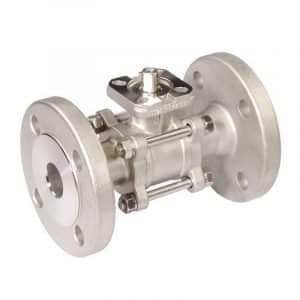
Armaturenfabrik Flanged ball valve 168E-BEE Automation pneumatic actuator 505 DVC Limit switches Type5320 Industrial valves Modification

In many industrial plants, shut-off valves are still operated by hand — by handwheel or lever, often in places that are hard to reach. With growing competitive pressure, rising safety requirements and an increasing shortage of skilled staff, automating these valves is becoming considerably more important. Anyone who automates butterfly valves, ball valves or throttle valves gains remote control, speed and safety — factors that make the decisive difference especially in safety-relevant processes such as chemicals or petrochemicals.

Industriefabrik Schneider GmbH automates valves with a rotating closure member — butterfly valves, ball valves, plug valves and throttle valves — directly in its own workshop in Großzöberitz. This article explains what happens technically and what matters in the design.

Which valves can be automated?

Almost any valve with a rotating closure member and a suitable mounting flange can be automated. This includes:

  • Butterfly valves (centric and eccentric)
  • Ball valves (2-piece, 3-piece, 2-way and 3-way)
  • Plug valves and throttle valves
  • Flue gas dampers for high-temperature applications

The connection is made to ISO 5211 — the internationally standardised interface dimension between valve and actuator. This makes it possible to connect practically any valve with a suitable mounting flange to a part-turn actuator, regardless of the original manufacturer.

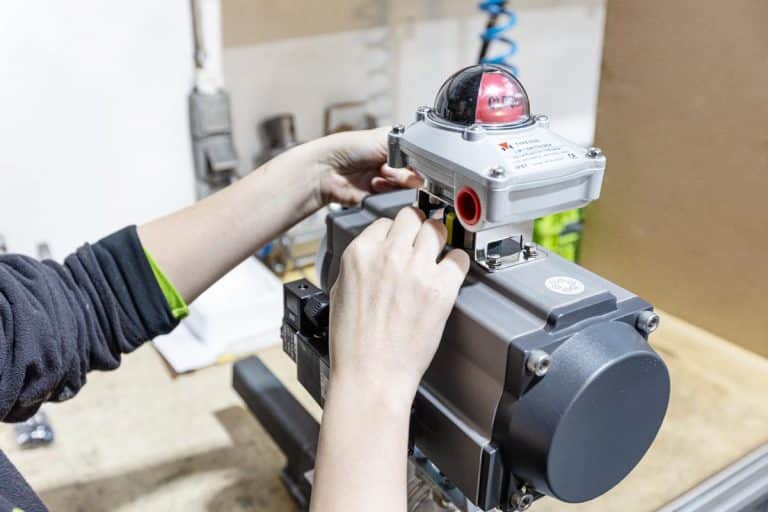
Armaturenfabrik Manufacturing Assembly Automation Industrial valves Ball valve Adpater Bridges Pneumatic actuator
Armaturenfabrik Manufacturing Modification Automation Industrial valves Ball valve Bridge Adapter Pneumatic actuator DVC505 Limit switches

The components of an automated valve

An automated valve is more than a valve with an actuator on top. It is a functional assembly of several matched components:

All components are sourced from well-known manufacturers and precisely matched to the respective valve — including correct sizing for the intended control pressure and any explosion protection requirements.

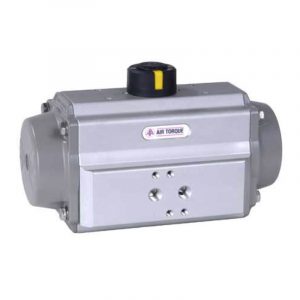
Armaturenfabrik pneumatic actuator Air Torque Editio 2010 Automation for butterfly valve and ball valve

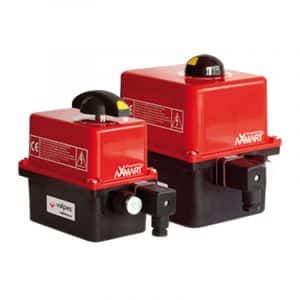
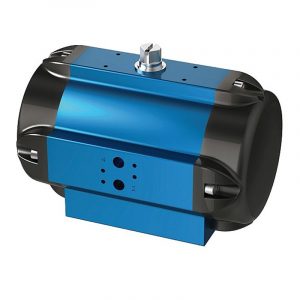
Part-turn actuator

pneumatic or electric, single-acting or double-acting. Pneumatic double-piston part-turn actuators are regarded as an efficient and safe solution for automated opening and closing. The selection depends on the required torque and the swivel angle of the valve — usually 90° for butterfly valves and ball valves.

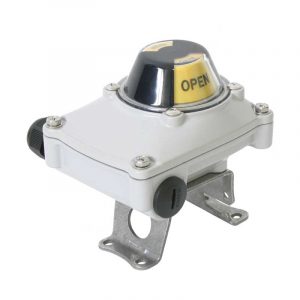
Armaturenfabrik Limit switches DVC type 5320 closed for electric or pneumatic actuators for the automation of valves, butterfly valves and ball valves, closed state

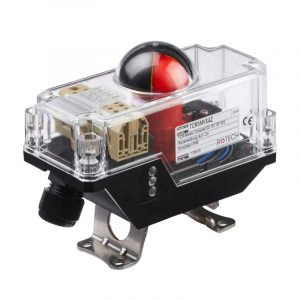
Limit switches

detect the exact position of the valve (open/closed or an intermediate position) and report it to the plant control system. Without reliable end-position feedback, the control system has no information on whether a safety-critical shut-off has actually been carried out.

Armaturenfabrik Solenoid valves NAMUR Type MNF DVC

Solenoid valve

controls the compressed air supply to the pneumatic actuator and thus converts the electrical control signal into mechanical movement.

Armaturenfabrik limit switches box microswitch or proximity switch, universal module from Rotech, type TCR - TPF

Positioner

is required when the valve is not only to switch open/closed but to move to precise intermediate positions for flow control.

Armaturenfabrik Fertigung Modifikation Automatisierung Industriearmatur Kugelhahn Brücke Adapter pneumatischer Antrieb Endschalter

Why function testing before delivery is decisive

An automated valve becomes part of the plant control system. If the position feedback fails, if the actuator switches too slowly or if the valve does not reach the intended safety position, the entire process can be endangered — not just a single component.

For that reason every automated valve at Industriefabrik Schneider GmbH undergoes a complete function test on an in-house test rig before delivery:

  • Leak test of the valve itself
  • Travel behaviour — correct movement across the entire swivel range
  • Torque — matching actuator output to valve requirement
  • Switching times — how quickly the valve opens and closes
  • End position signalling — correct feedback to the control system

The result is a documented function test report that verifiably confirms safe functionality at the specified control pressure, correct end-position signalling and, where applicable, the safety position.

The benefit for the plant operator

Automated valves offer several tangible advantages over manual operation:

  • Remote control — opening and closing without local access
  • Position monitoring — the current state can be seen at any time via the plant control system
  • Time saving — especially in large or hard-to-reach installations
  • Greater safety — no personnel have to enter hazardous areas to operate a valve by hand
  • Faster switching times — automated actuation generally responds faster than manual operation by handwheel or lever
Armaturenfabrik Edelstahl Rohrleitungen Manometer Regelventil Pumpe, Vorteile der automatisieren Armatur, wie Absperrarmatur, pneumatischer Antrieb mit Kugelhahn
Armaturenfabrik Manufacturing Assembly Automation Industrial valves Ball valve Adpater Bridges Pneumatic actuator Limit switches

Automation with your own or a supplied valve

Industriefabrik Schneider GmbH offers two routes to an automated valve:

  1. Complete solution from one source — valve, actuator, solenoid valve and sensors are selected independently of manufacturer, matched to one another, assembled and tested.
  2. Automation of your existing valve — you provide the valve, we take care of the automation and the function test and return the finished assembly.

Both routes end with the same quality assurance: 100 % function testing before delivery.

Armaturenfabrik Regelventil Stellungsregler Seitenansicht, Spindelverlängerung, Antrieb, Handbetrieb

Additional modifications — more than automation alone

Automation is frequently combined with further adaptations that widen a valve field of use:

  1. Heating jackets and leakage jackets — against solidifying viscous media or for hazardous-substance safety

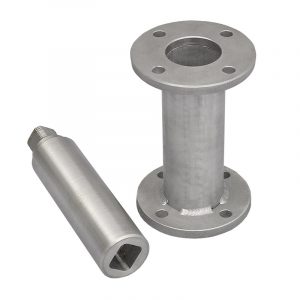
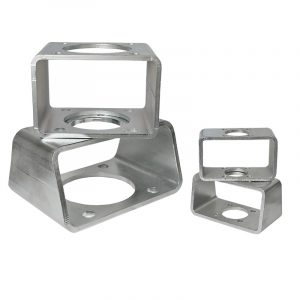
  2. Stem extensions and mounting brackets — to ISO 5211 and project specifications, for the precise connection of valve and actuator

  3. Standard-compliant flanging — to EN 1092-1 or ASME B16.5

  4. Special materials — for aggressive media or high-temperature applications, for example

More on this in the Manufacture of industrial valves section and under Valve modification and valve construction.

Conclusion

Valve automation is more than fitting an actuator. It is a technical design task that brings actuator, control technology and safety requirements together into a function-tested unit. Industriefabrik Schneider GmbH handles this entire process — from the manufacturer-independent selection of components through assembly to the documented function test on its own test rig.

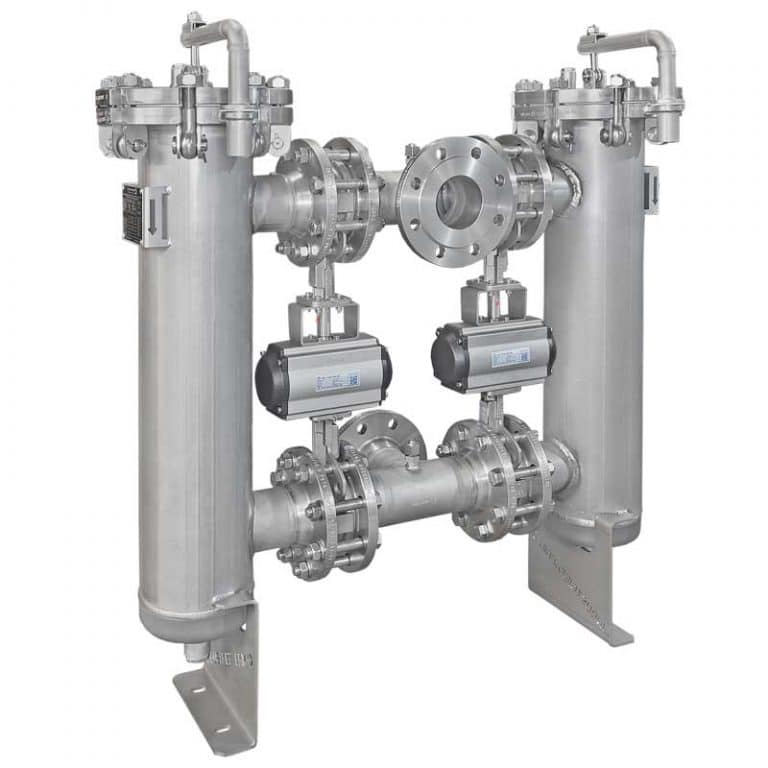
Armaturenfabrik Duplex strainer Reversible DN80 with actuator-automated stainless steel swivel arm Quick-release butterfly valve by Industriefabrik Schneider

Make a request directly

Would you like individual advice?

Benefit from our expert knowledge in process monitoring. Our experienced team will provide you with sound advice on selecting the optimum products for your specific requirements. Arrange your personal consultation now!
Cookie Consent with Real Cookie Banner