When media freeze, there is more than just the system
In temperature-critical processes, the cooling and solidification of viscous media can block valves, pipes and filters in a very short time – resulting in downtime, cleaning work and risks to operational safety.
This is precisely where heating jackets come in: They keep the medium in the valves or pipe section reliably flowing and thus stabilize the process.
For applications with toxic or environmentally hazardous media, an additional safety component is added: leakage jackets (double jacket) can contain leaks in a controlled manner and optionally support detection.
Heating jackets: process reliability through stable temperature control
A heating jacket is an outer shell fitted around the valve/component, through which heat is introduced into the component in order to reliably control the temperature of temperature-critical media.
Typical applications are processes in which media solidify irreversibly on cooling and can thus render valves and pipes “unusable”.
Advantages in operation
- Reduced downtimes because the medium does not cool down/solidify.
- Increased operational safetythanks to reliable functioning of valves and filters, even in critical temperature phases.
- More stable process conditions because temperature fluctuations at critical junctions are minimized.
Heating media & versions: designed to match the system
Depending on the process requirements, heating is provided by steam, water or thermal oil.
Both single-jacket and double-jacket versions are available for different requirements – e.g. if a more even heat distribution or additional safety functions are required.
Temperature range
Heating jackets are designed for operating temperatures of up to 200 °C as standard; higher temperatures can be realized on request for specific projects.
The PDF also shows practical examples, e.g. applications with thermal oil up to 350 °C as well as valve temperature ranges that can reach up to 400 °C (depending on gasket/pressure).

Leakage jackets (double jacket): Protection for hazardous substances & sensitive system operation
In systems with toxic and hazardous substances, leaks can never be completely ruled out despite careful design – especially due to wear and tear or operating conditions.
A leakage jacket / double jacket provides an additional protective barrier to prevent uncontrolled leaks and protect personnel and the system.
Optionally, a leakage jacket can also be designed with a connection option for sensors for leakage detection
For which components are heating and leakage jackets suitable?
Heating and leakage jackets are individually adapted to the geometry and installation situation and are suitable for, among other things
- Ball valves (2-/3-way, 2-/3-piece, block ball valves, compact ball valves, plug valves).
- Valves (shut-off, regulating, control, angle seat and straight seat valves).
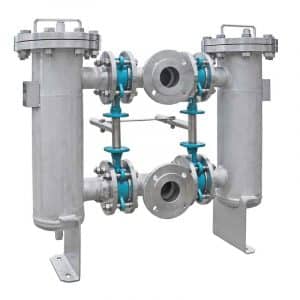
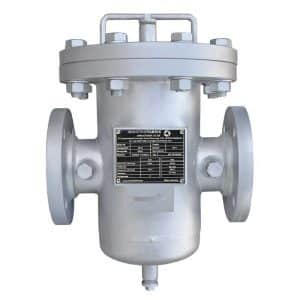
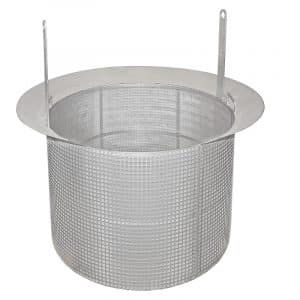
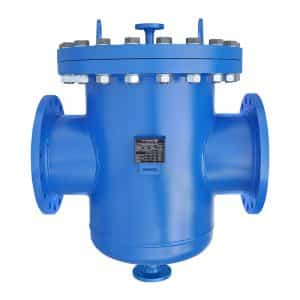
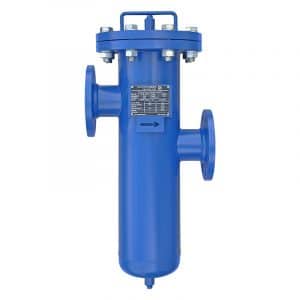
- Filters & strainers (simplex strainers, basket strainers, Y-strainers, special filters).
Materials & connections: robust integration into your system
Stainless steel is used as standard; special materials are possible for aggressive media or special requirements.
Various connection variants are common for integration into existing piping and fitting concepts (e.g. threaded or flanged connections as well as special solutions).
The PDF supplements typical process and heating medium connections, e.g. flange, thread, butt weld ends and other screw connection variants.
Quality & testing: designed, manufactured and tested
Heating and leakage jackets are designed, manufactured and tested according to project specifications – including pressure/leakage testing and quality control.
An in-house design department is available to assist with project-related design.
Typical problem media: where heating jackets are particularly helpful
Heating jackets are particularly relevant for media that can change their viscosity or solidify depending on the temperature – e.g. oils, greases, resins (and comparable viscous process media).
Products from the category Filter construction
Make a request directly
Would you like individual advice?